
At Neurosurgery One’s Denver deep brain stimulation surgery program, we use advanced DBS technology to best serve our patients. That means every tool we use, every device we offer and every imaging technique we employ begins with a single question: What do you need to get the best possible outcome?
That philosophy allows us to deliver the same level of precision and innovation found at major academic medical centers while offering a care experience that is personal, compassionate, and designed around your life, not our systems. And because our program is built around coordination and efficiency, most patients move from first appointment through surgery and into post-surgical care in three months or less — half the time it often takes at other institutions.
Care That Starts with Listening
Before we recommend any technology or device, we take time to understand you — your condition, your goals, your lifestyle and what matters most to you. That conversation shapes everything that follows.DBS is not one-size-fits-all. The imaging protocol, the surgical approach, the device selected, and the way your therapy is managed over time should be tailored to you. Our team has the training, the tools and the commitment to make that happen.
Advanced DBS Surgical Imaging Improves Outcomes
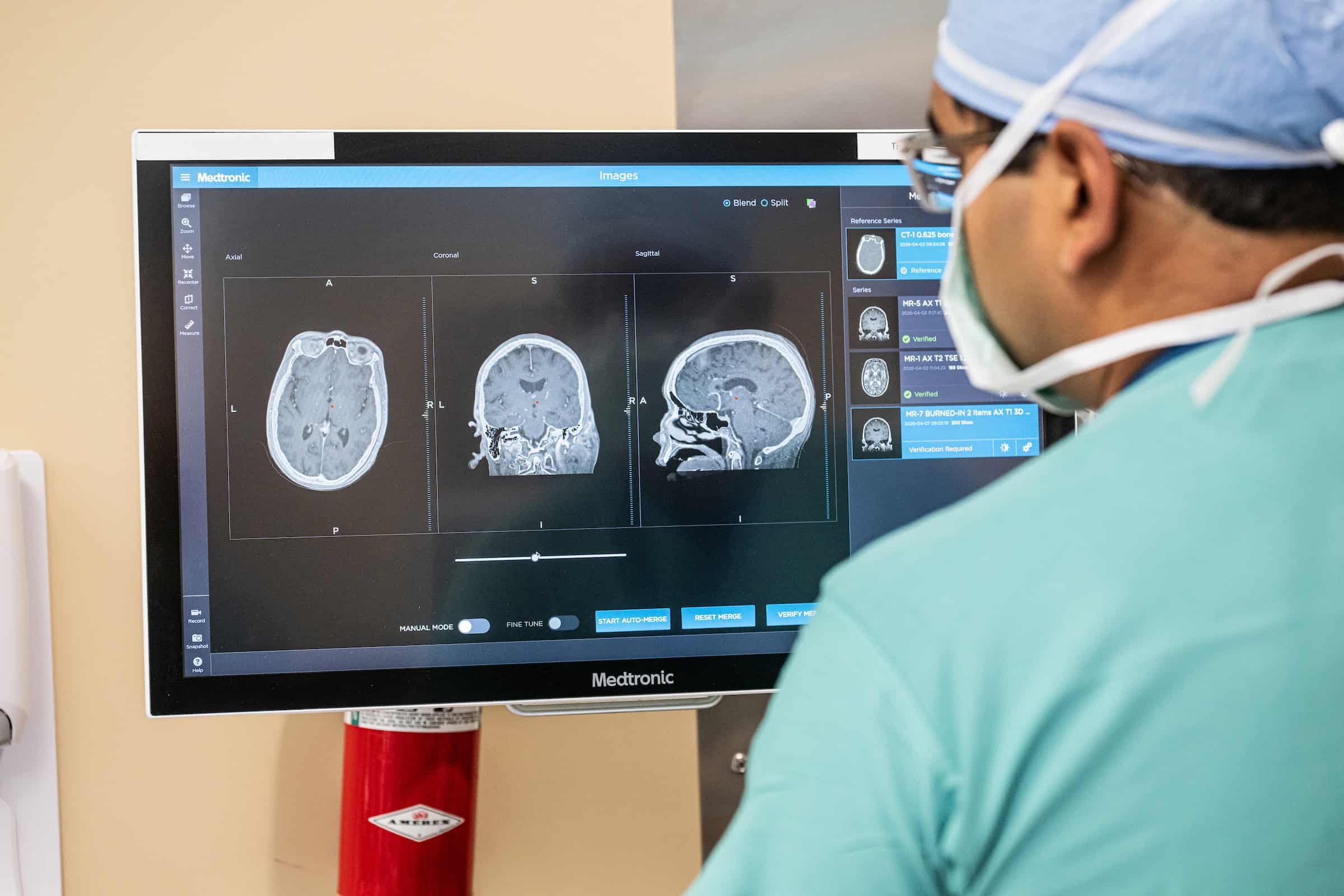
Precise DBS outcomes begin before you enter the operating room. Our surgeons use a combination of FGATIR imaging and T2 sequencing to create an exceptionally detailed, three-dimensional picture of your brain’s anatomy.
FGATIR (Fast Gray Matter Acquisition T1 Inversion Recovery) was developed at one of the nation’s leading DBS programs and is designed to reveal deep brain structures with a level of clarity that standard MRI cannot achieve. When combined with T2 imaging, it gives our surgical team a comprehensive map of your brain, showing the precise target for your DBS lead and the surrounding anatomy that must be protected.
Using the highest quality images means we can plan better, which results in more accurate, more confident surgery.
Fiber Mapping: Protecting Brain Function
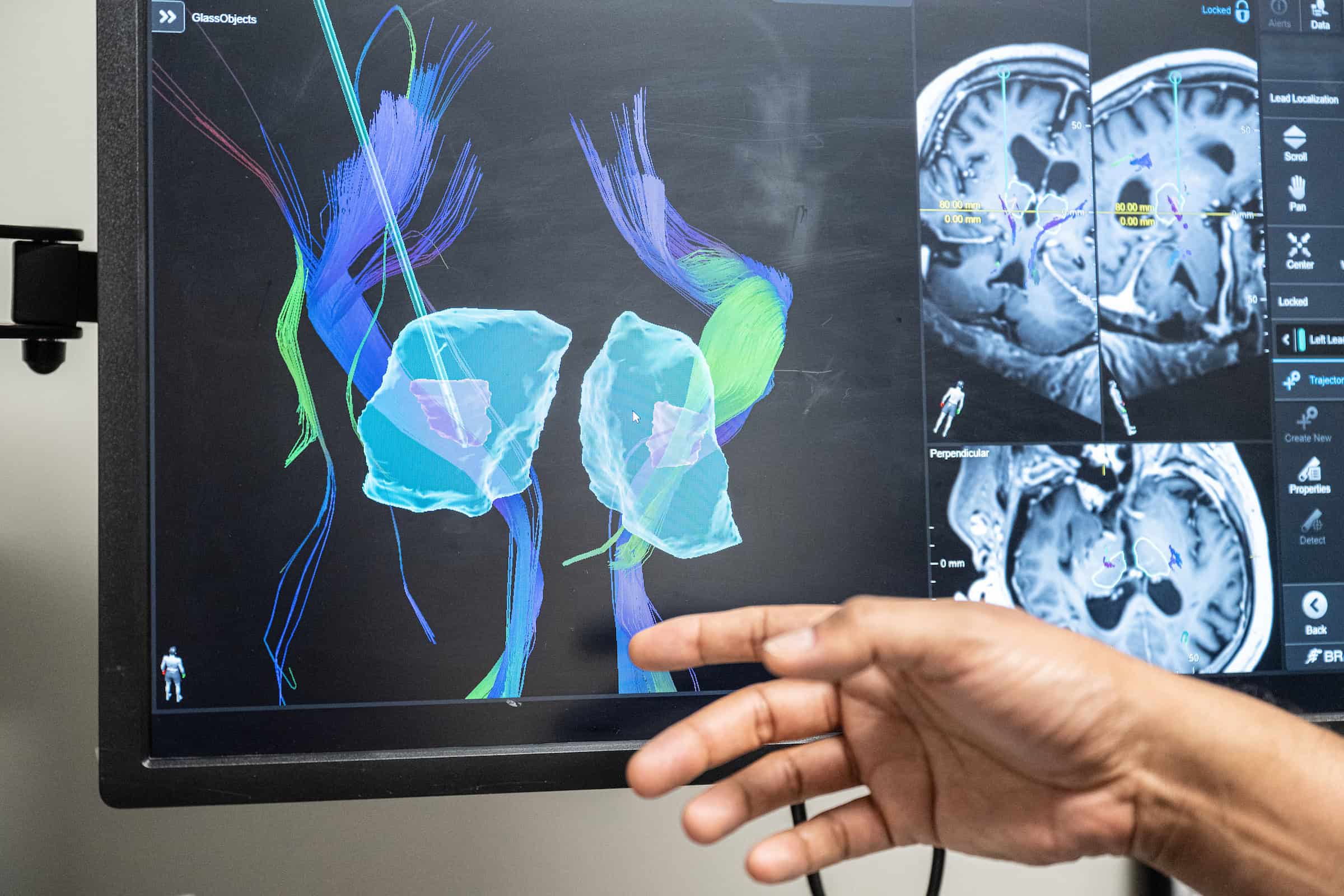
Your brain’s structures are connected by millions of fiber pathways that govern movement, speech, memory and more. Fiber mapping allows your DBS surgeon to visualize these pathways in three dimensions before surgery begins. This allows us to guide the DBS leads to the right target while protecting the connections most important to your quality of life.
This technology moves surgical planning from anatomy alone to a fuller picture of how your individual brain is wired. It is another way we individualize your care rather than apply a standard template.
NaviNetics Head Frame: Precision And Patient Comfort
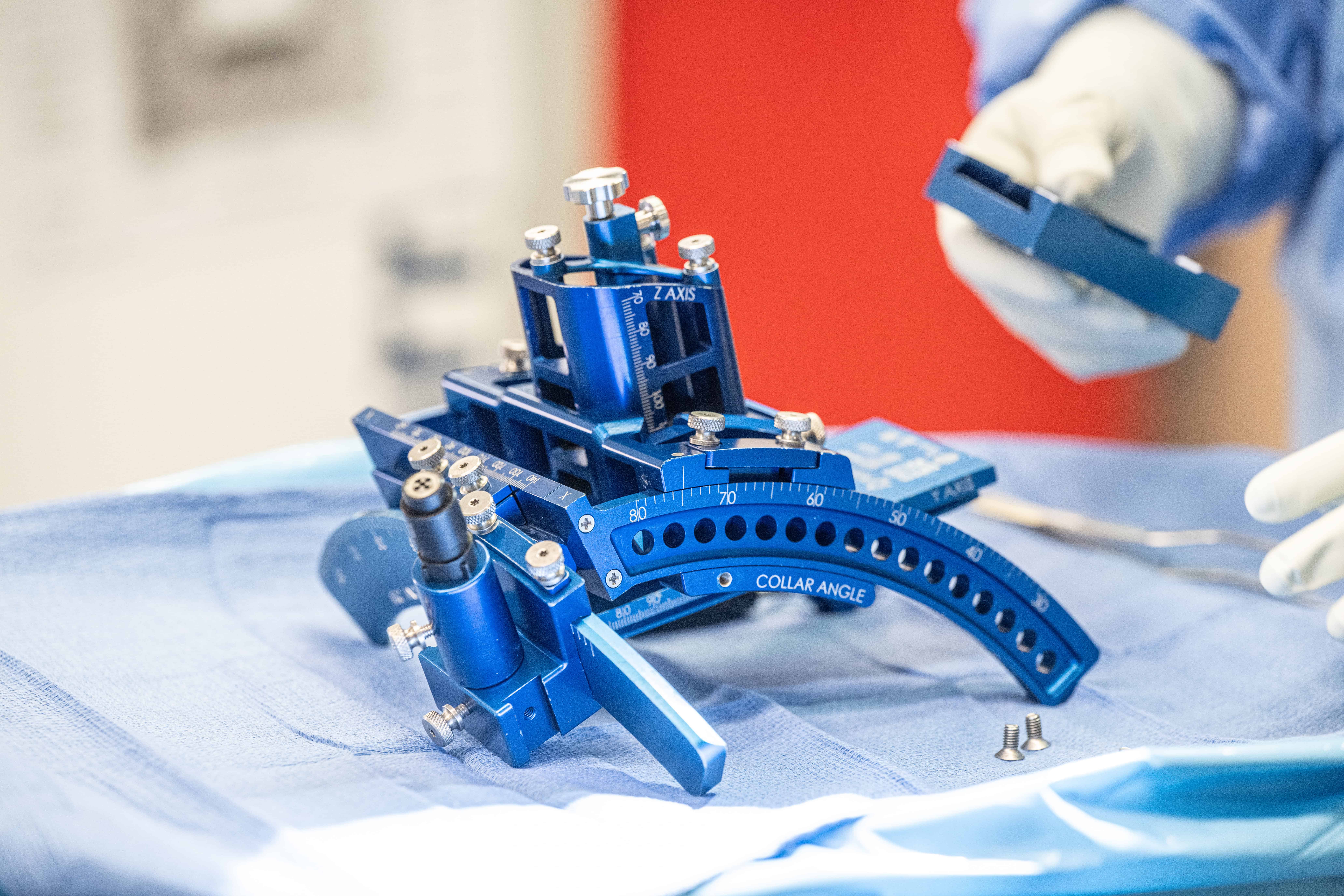
Traditional DBS surgery uses a large head ring to establish the precise coordinate system surgeons rely on for targeting. At the Denver DBS Center, we utilize the NaviNetics Stereotactic System, which uses a small anchor key affixed to the skull that is lighter than traditional systems. Designed for both patient comfort and surgical precision, the NaviNetics frame keeps your face clear and unobstructed while giving your surgeon the flexibility to tailor the approach to your individual anatomy without sacrificing accuracy.
Lead Placement: Robotic-Assisted When It is Best for You
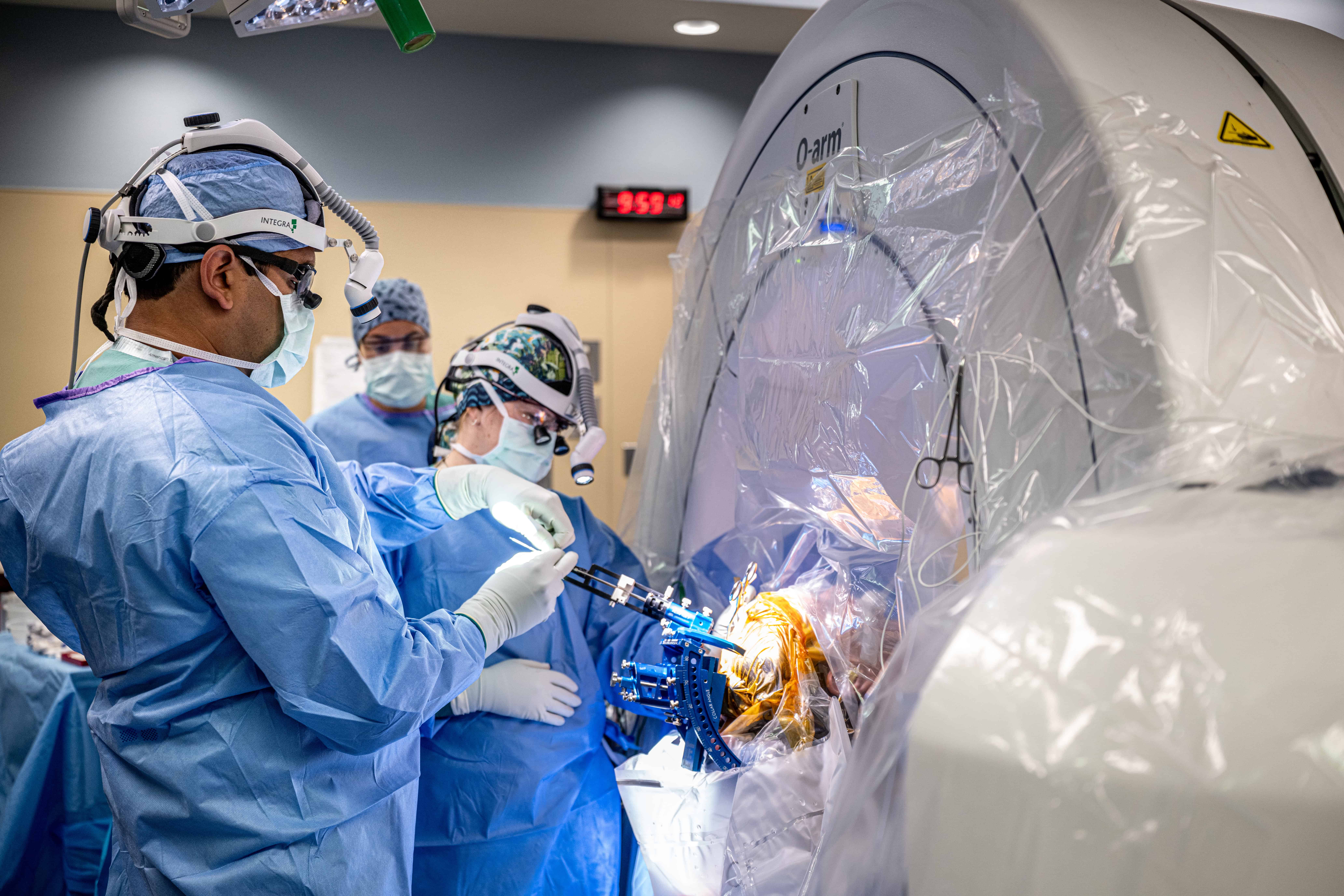
Every DBS surgery is different, and the tools used to place the lead are chosen with that in mind. For surgeries where robotic assistance offers a meaningful advantage, our team uses a robotic system to guide electrode placement with mechanical consistency that complements your surgeon’s skill and judgment.
Not every patient requires robotic guidance, and your care team at the Denver DBS Center will determine the approach best suited to your anatomy and procedure. What remains constant is our commitment to optimal outcomes by choosing the right tools for you, not simply defaulting to the same approach for every patient.
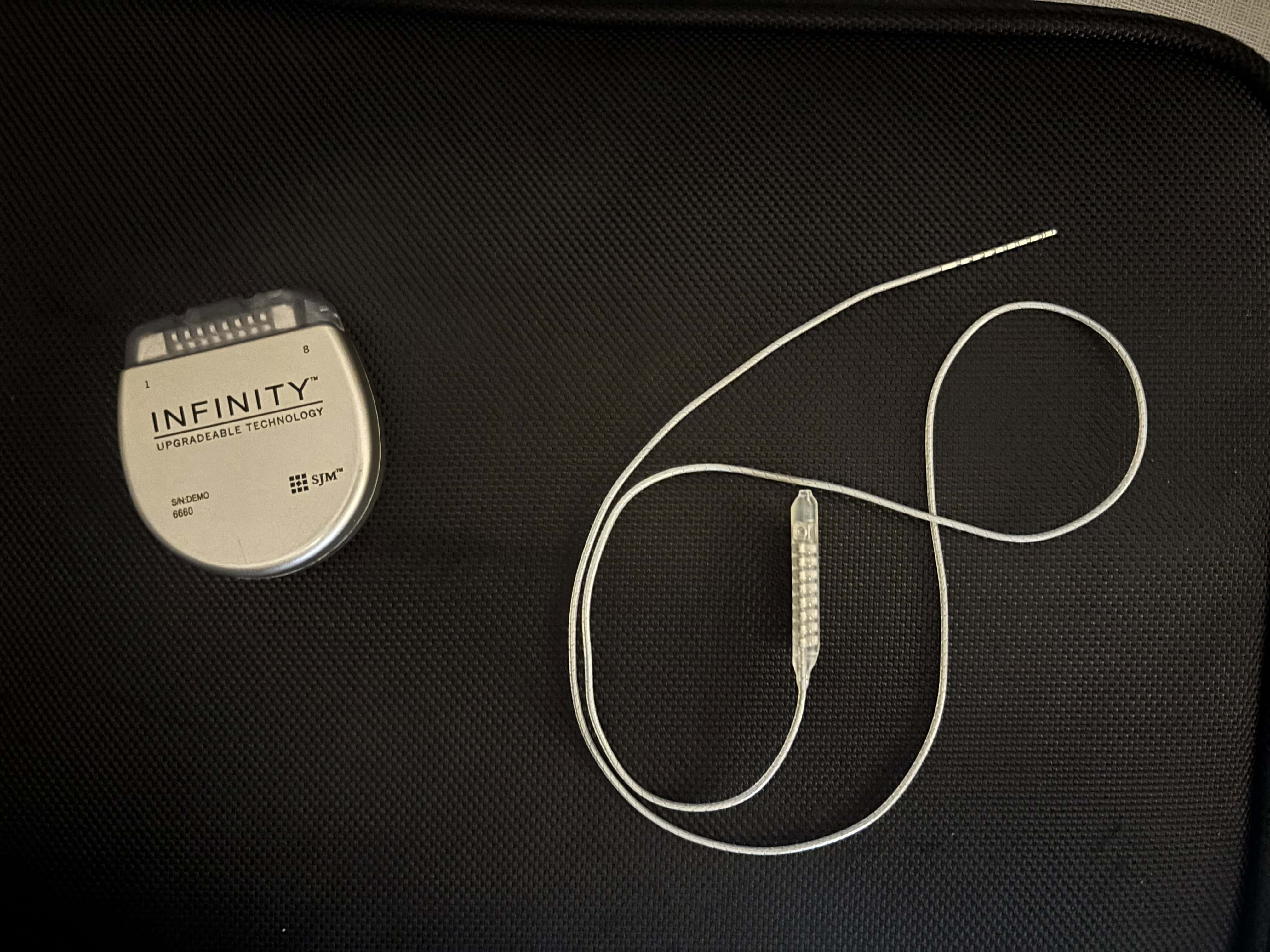
All Three Major DBS Devices — Matched to You
The Denver DBS Center offers the three FDA-approved DBS device platforms available today from the world’s leading manufacturers: Abbott, Boston Scientific and Medtronic.
Each platform has distinct features, programming capabilities, battery options and MRI compatibility profiles. Whereas some DBS centers offer only one system, our team is deeply familiar with all three and will recommend the device that best fits your diagnosis, anatomy, lifestyle and long-term goals.
This independence matters. It means your device selection is driven entirely by what is best for you.
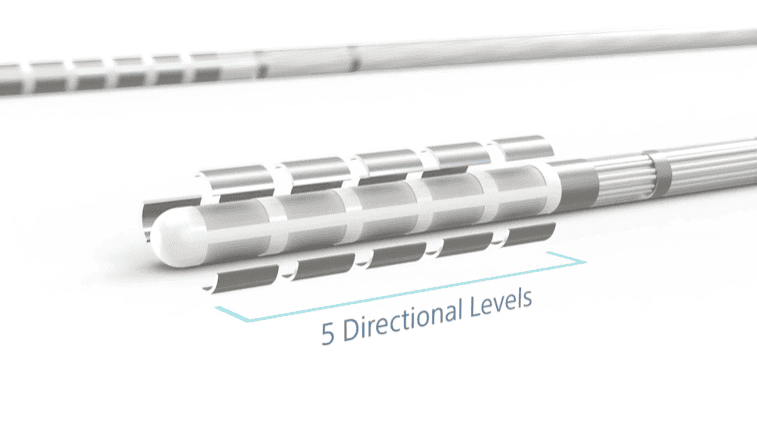
Directional Lead Technology: Steering DBS Therapy with Greater Control
Traditional DBS leads deliver stimulation in a ring around the electrode. In contrast, directional leads allow your programming team to steer electrical stimulation toward the target tissue and away from structures that could cause side effects. Newer directional lead technology even means we can shut off part of the leads, if needed to maintain healthy function.
This added dimension of control means therapy can be fine-tuned more precisely after surgery, often expanding the therapeutic window and reducing unwanted effects. For many patients, directional stimulation means better symptom control without sacrificing function.
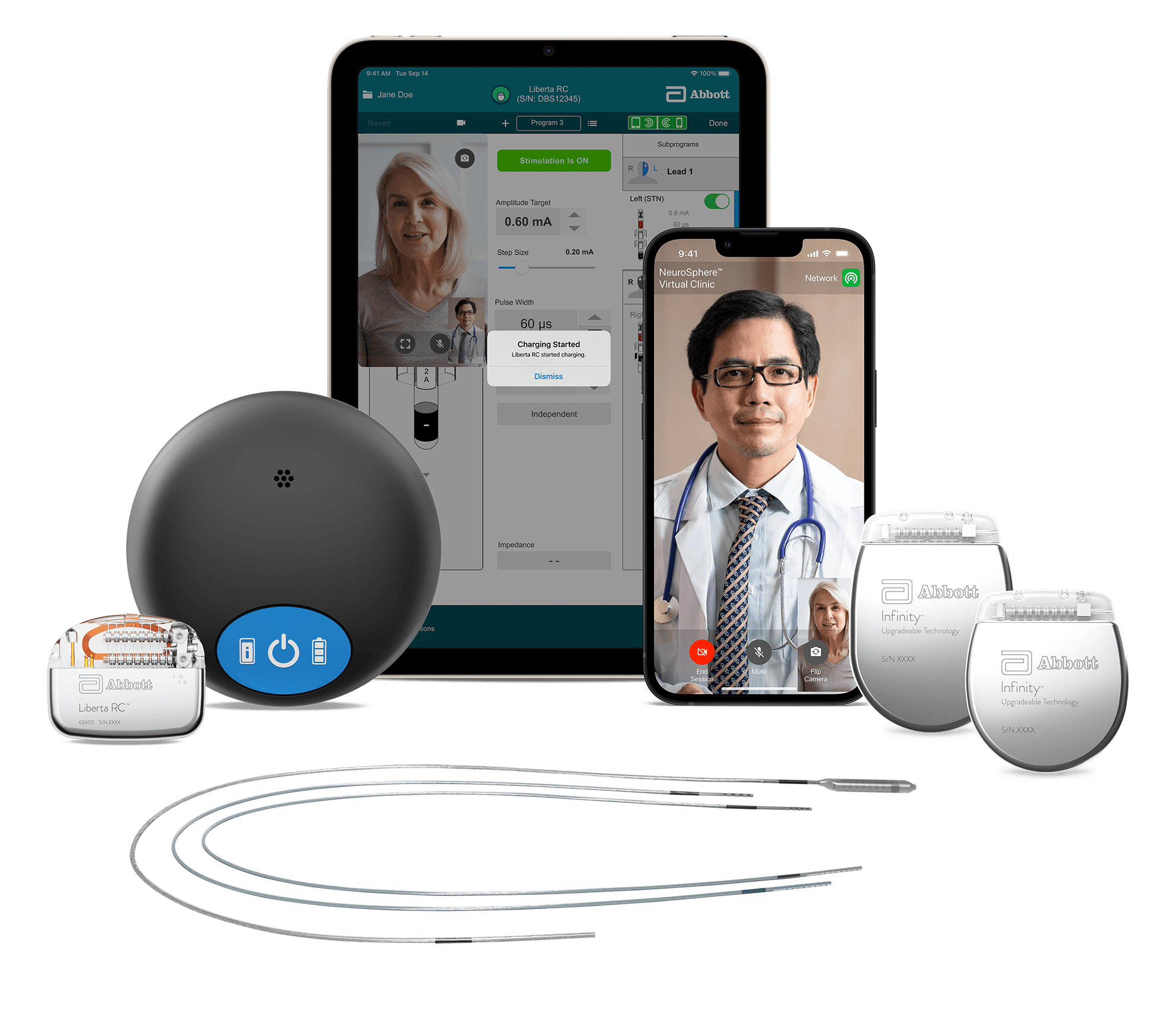
Remote DBS Programming: Expert Care from Home
Managing DBS therapy has traditionally required frequent in-clinic visits for programming adjustments. This can be a significant burden for patients managing a movement disorder, especially those who live at a distance from Denver or who lack accessible transportation.
The Denver DBS Center at Neurosurgery One now offers Abbott’s NeuroSphere Virtual Clinic, an FDA-cleared remote programming platform that allows our team to adjust your DBS therapy from wherever you are via a telehealth session.
In an international study, patients with access to NeuroSphere Virtual Clinic reached symptom improvement 15.1 days sooner than those receiving in-clinic care alone, and experienced quality-of-life gains an entire month earlier. Symptom improvement was sustained over time for both groups.
For patients with Parkinson’s disease, essential tremor or other movement disorders, faster access to expert DBS programming can make a meaningful difference in daily life. Remote programming provides that access to patients across Colorado and the region.
Academic-Level DBS Technology. A More Human Experience.
Major academic medical centers have the technology. What they often cannot offer is time — time to know you, time to explain the process, and the operational efficiency to move quickly when you’re ready for DBS.
At the Denver DBS Center at Neurosurgery One, you get it all. Our surgeons bring the same training and tools found at the programs that pioneered many of the techniques described on this page. But because our program is built around coordination with a dedicated Nurse Navigator, streamlined scheduling, and a DBS team that works as a unit, we’re able to take patients from first appointment through surgery and into post-surgical care in three months or less. At most academic centers, including UC Health, the same process routinely takes six months or longer.
That speed isn’t a shortcut. It’s the result of doing everything right, in the right order, without the delays that come with navigating a large institution. Every tool we use and every surgery we plan, is individualized — and still, we move faster and with a more compassionate relationship with our patients.
Because when you’re living with a movement disorder, time matters.
Ready to Take the Next Step?
Ready to learn whether DBS is right for you? Schedule a clinical consultation with our team or connect with our DBS Nurse Navigator to start with a conversation.
FAQs About DBS Technology
Here are a few common questions we get from patients. If you have a question that is not listed here, please schedule a call with our DBS Nurse Navigator, who can answer all of your DBS questions.
- What DBS devices does the Denver DBS Center use?
The Denver DBS Center offers all three major FDA-approved DBS systems: Abbott, Boston Scientific and Medtronic. Rather than defaulting to a single manufacturer, our team selects the device that best fits each patient’s diagnosis, anatomy, lifestyle and long-term goals.
- How long does DBS surgery take at Neurosurgery One?
At Neurosurgery One’s Denver deep brain stimulation surgery program, most patients move from their first appointment through surgery and into post-surgical care in three months or less. At many academic medical centers, the same process takes six months or longer. Our streamlined, coordinated approach makes it faster without sacrificing individualization or quality.
- How fast can I get a DBS appointment at Neurosurgery One?
Neurosurgery One has designated DBS appointments, which means we can see new patients within a week or sooner. If you’re looking for information about DBS, our DBS Nurse Navigator can schedule an informational session via telephone usually the same day or within 24 hours. Schedule a call.
- What is FGATIR imaging and why does it matter for DBS?
FGATIR (Fast Gray Matter Acquisition T1 Inversion Recovery) is a specialized MRI sequence that reveals deep brain structures with greater clarity than standard MRI. When combined with T2 imaging, it gives Denver DBS Center surgeons a precise, three-dimensional map of the surgical target — improving accuracy before the patient ever enters the operating room.
- What is fiber mapping in DBS surgery?
Fiber mapping is a pre-surgical imaging technique that visualizes the brain’s white matter pathways in three dimensions. Neurosurgeons at the Denver DBS Center use fiber mapping to create a surgical plan on how to guide the DBS lead to the intended target while protecting the fiber connections responsible for movement, speech, and cognition.
- Can I get my DBS programmed remotely?
Yes. The Denver DBS Center offers Abbott’s NeuroSphere Virtual Clinic, an FDA-cleared remote programming platform, to allow DBS programming via telehealth appointments. Clinical trial data from the ROAM-DBS study showed patients using remote programming reached symptom improvement 15.1 days sooner than those receiving in-clinic care only.
- What is a directional DBS lead?
A directional lead allows the surgical team to steer electrical stimulation toward the target tissue rather than delivering it in a uniform ring around the electrode. This precision helps maximize symptom control while minimizing side effects and allows for more refined programming adjustments after surgery.
- What is the NaviNetics head frame?
The NaviNetics Stereotactic System is an FDA-cleared head stabilization system used during DBS surgery at the Denver DBS Center. Instead of a traditional full head ring, it uses a small anchor key affixed to the skull, keeping the patient’s face unobstructed and reducing the overall burden of the frame. This improves comfort for patients without sacrificing sub-millimeter surgical precision.