
Hearing the words “you might need a spinal fusion” can be unsettling. It’s a big operation, and if you’ve spent any time researching it, you’ve probably run into strong opinions — some patients call it life-changing, others call it unnecessary. So which is it?
The truth is fusion is neither a miracle nor a scare tactic. It’s a specific tool for a specific problem, and a good surgeon should be able to explain exactly why you need one — or why you don’t.
Back pain itself is extremely common. In 2018, nearly 3 in 10 adults reported lower back pain in the past three months, according to the CDC’s National Health Interview Survey. But most back pain — even the kind that sends you to a specialist like me — never requires fusion. Understanding when it actually does is the first step toward feeling confident in your treatment plan.
What Spinal Fusion Is Actually Doing
Every spine has motion segments — the small joints and discs that let you bend, twist and rotate. When one of those segments becomes unstable (from arthritis, a slipped disc, or abnormal curvature like scoliosis), it can cause chronic pain or pinch the nerves running through it.
The main aim of a spinal fusion surgery is to stabilize the spine, especially if there’s abnormal motion. We do this by placing screws, rods and cages into the spine, along with bone graft. Over time, the treated segments grow together and fuse — literally becoming one solid piece of bone instead of a moving joint.
That’s a distinction patients often miss: fusion isn’t “done” the day you leave the operating room. The hardware holds everything in place while the actual fusion — new bone growth — happens gradually, typically over nine months to a year.
Why Fusion Is (Almost) Always a Last Resort
Let me be clear. Except in very rare cases such as a traumatic accident, spinal fusion should not be the first or even one of the first treatments that is recommended for pain in your arms, legs, neck or lower back caused by a spine condition. In fact, spinal fusion in 99% of cases is an elective procedure — you should only consider it if the benefits outweigh the costs in your mind. No surgeon can make that decision for you; that’s why I talk in depth with my patients to be sure they have all the information they need to make an informed and confident decision.
Like my colleagues throughout Neurosurgery One, I usually recommended spinal fusion only after conservative treatments — physical therapy, injections, less invasive interventional pain procedures — have been tried, or when imaging makes clear that fusion is the only way to stabilize the spine and relieve pressure on the nerves.
This isn’t a guessing game. If the odds of meaningfully helping you aren’t strong, I won’t recommend it. If I do recommend spinal fusion, I will review your imaging with you and walk you through my reasoning. Before you decide if surgery is the best answer for you, you should know clearly:
- what is causing your symptoms — not just the name of your condition but I want you to actually know and see the issue in your spine that is causing pain, weakness or other symptoms
- where I see instability that will benefit from fusion
- why fusion, rather than other procedures, is my recommended choice for you.
What Actually Happens During the Procedure
The most common lumbar, or lower back, spinal fusion procedure is called a TLIF (transforaminal lumbar interbody fusion). In plain terms, it has two goals: relieving pressure on the nerve roots (a procedure we call “decompression”) and stabilizing the spine so it doesn’t start to compress the nerve again.
First, I will remove the bone, ligament or joint tissue pressing on the nerves. Once the nerves are free, I place small screws into the spine, clean out the disc space to ensure the nerve won’t be impacted, and then I place a small cage that is packed with bone graft around the disc space that I just decompressed. Once that is in place, I use rods to lock the screws together on each side of the spine and put more bone graft.
For certain fusions, particularly at the base of the spine (L5–S1), I may use a two-stage, front-and-back approach — entering through the abdomen first to place a larger cage with more bone graft, then adding screws from the back the next day. Splitting the procedure this way, rather than doing it all in one long session, shortens the time a patient spends under anesthesia at any one stretch.
Setting Yourself Up for a Successful Fusion
Because fusion depends on healthy bone growth, you play a critical role in the outcome of your fusion surgery. I will often order a DEXA scan to check the density of your bones. If you have weak bones, the screws and cage (or hardware) I place during surgery is at risk of failing. Think of it like hanging a picture: If you put it into dry wall without a stud, the picture will fall off the wall.
If you do have osteoporosis or osteopenia, I will recommend that you go to our Bone Health Clinic where the specialists will help you strengthen your bones prior to surgery. Often this can be done during the time you are waiting for your surgery, so there’s no slowdown of the process. We have our own Bone Health Clinic right in our offices to make it easy for you.
And if you smoke, vape or use nicotine in any form, I’m going to talk to you about stopping because nicotine has been shown to significantly lower fusion success rates. Ideally, I’d like you to stop using any nicotine products for about three months around surgery.
At Neurosurgery One, we utilize an enhanced recovery protocol includes a nurse practitioner pre-op visit, a spine class covering what to expect, and often pre-surgery physical therapy to strengthen the back beforehand — all aimed at giving you the best possible fusion outcome.
A Common Misconception Worth Clearing Up
Unfortunately, many patients have pain that is caused by arthritis in the spine. Spinal fusion will not cure or take away the arthritis. If we recommend fusion, it is for a specific issue that may be related to the arthritis but separate.
It’s very important for your spine surgeon to explain what they are using fusion to treat and how it will impact your symptoms and how it won’t. For instance, fusion may relieve pain being caused by a compressed nerve, but you still may have pain from arthritis in other parts of your spine. In fact, we often see patients with multiple conditions — some that can be helped with surgery and some that cannot.
Talk With a Specialist Before You Decide
If you’ve been told you might need a spinal fusion — or you want a second opinion before committing to one — an honest conversation with a board-certified neurosurgeon is the best next step. Schedule a consultation with the Neurosurgery One spine team to review your imaging and options.
Curious what recovery actually looks like day to day? We cover that in full detail in our guide, How Long Does Spinal Fusion Recovery Take?.
FAQ: Spinal Fusion
What is a TLIF?
A TLIF (transforaminal lumbar interbody fusion) is the most common type of lumbar spinal fusion. It relieves pressure on compressed nerve roots and stabilizes the spine using screws, rods and a bone-graft-filled cage, allowing the treated segment to fuse over time.
How do neurosurgeons decide if I need spinal fusion?
Surgeons typically recommend fusion only after conservative treatments haven’t worked, or when imaging shows a specific spinal segment is unstable and pressing on nerves. At Neurosurgery One, fusion is treated as a last resort rather than a first option.
Is spinal fusion always a last-resort surgery?
For most surgeons, yes. Less invasive options and conservative care are typically tried first. Fusion is generally reserved for cases where instability, nerve compression or curvature (like scoliosis) can’t be resolved another way.
Does smoking or vaping affect spinal fusion success?
Yes. Nicotine — from cigarettes, vapes or other products — has been shown to significantly lower fusion success rates. Patients are typically asked to stop all nicotine use for about three months around surgery.
Can spinal fusion cure arthritis in the spine?
No. Fusion stabilizes and treats a specific segment of the spine; it doesn’t reverse arthritis (degenerative disc disease) elsewhere. Patients can still experience pain in a different area of the spine due to the arthritis.
How long does it take to fully recover from spinal fusion?
Recovery timelines vary by procedure and approach. Most patients see significant improvement within a few weeks, though full bone fusion can take nine months to a year. See our complete guide, How Long Does Spinal Fusion Recovery Take?, for a detailed week-by-week timeline.
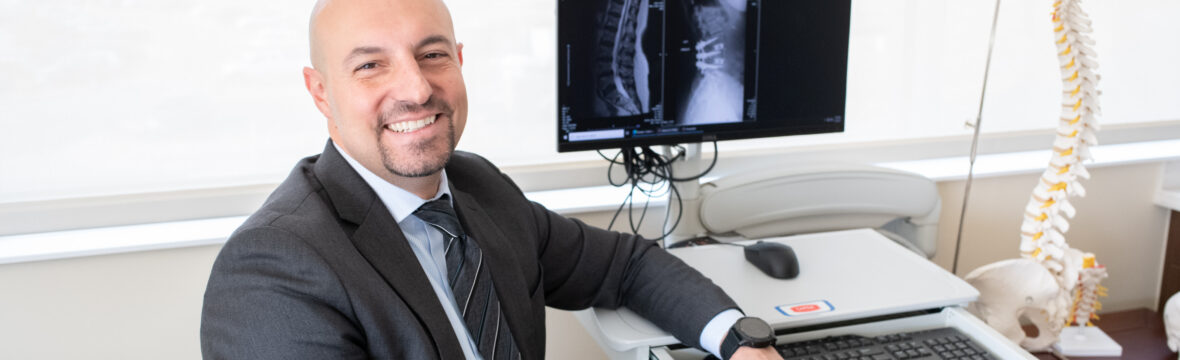
 NeuroSurgery One, Dr. Wissam Asfahani. April 30, 2020. Photo by Ellen Jaskol
Dr. Wissam Asfahani, is a board-certified neurosurgeon and spine surgeon specializing in minimally invasive spine surgery and complex brain and spine conditions. Dr. Asfahani, named a 2025 and 2026 Top Doctor, sees patients at Neurosurgery One’s Parker and Lone Tree clinics and treats conditions including herniated discs, spinal stenosis, sacroiliac (SI) joint dysfunction, brain and spine tumors, and traumatic brain and spine injuries. As Medical Director of Neurosurgery at AdventHealth Parker, he is known for his compassionate, patient-centered approach, taking time to listen closely to patients and create customized treatment plans using the latest evidence-based techniques and technologies.